Phone Glow vs. Red Light: What Actually Saves Your Melatonin
The Midnight Screen Trap: Why Red Bulbs Won't Save You
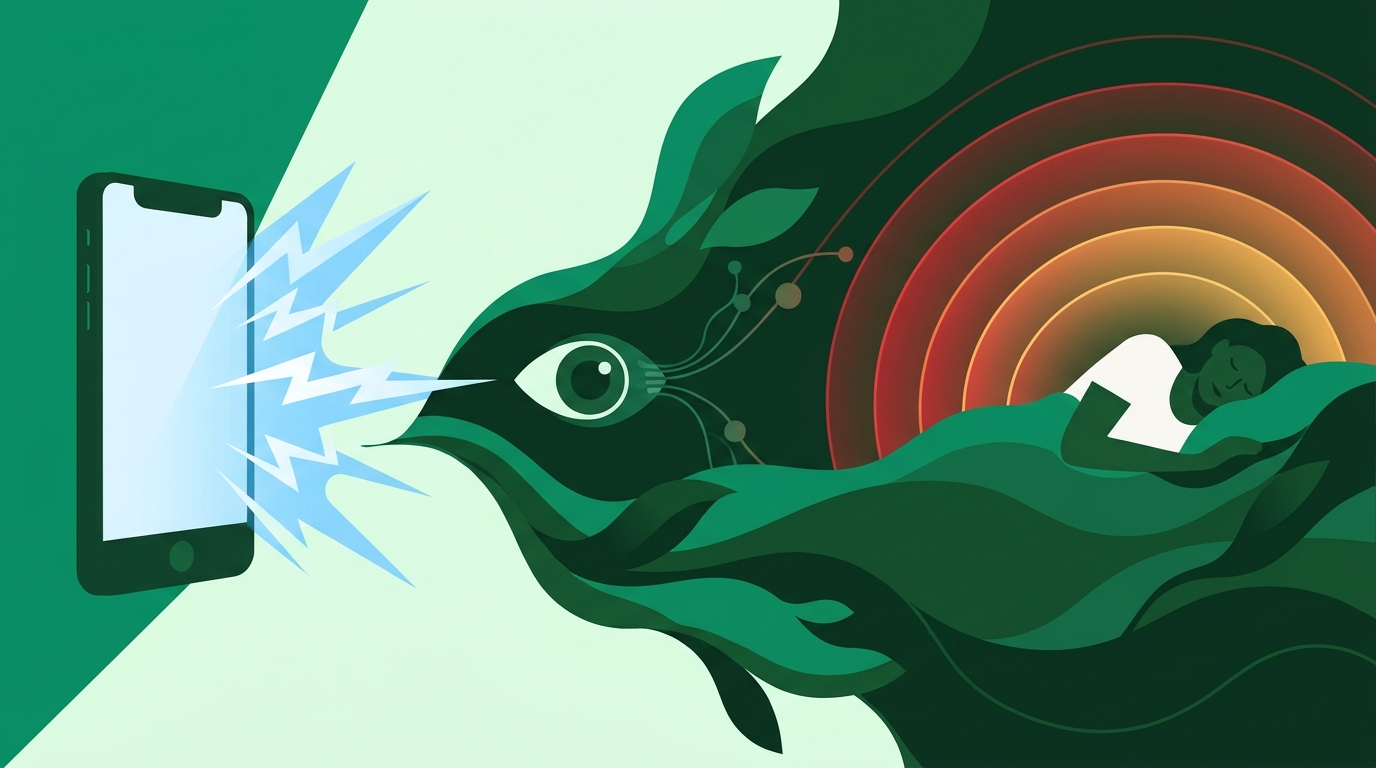
NBC News just dropped a feature asking a question I hear in my inbox every single week: Your phone's blue glow is keeping you up. Could red light be the fix? The premise sounds seductive. You blast your eyes with short-wavelength blue photons from your smartphone until 11:45 PM, switch on a trendy ruby-red bedside lamp, and expect deep restorative slow-wave sleep to magically kick in. It doesn't work that way. Biology doesn't negotiate with aesthetic shortcuts.
I've spent years tracking circadian biology, analyzing nocturnal heart rate variability (HRV), and testing photobiological interventions in our lab. The mainstream conversation around light exposure remains dangerously shallow. Most people treat red light as a biochemical eraser—an antidote you swallow with your retinas to cancel out ninety minutes of doomscrolling. That is a physiological impossibility. If you want to protect your sleep architecture, repair your hormonal rhythms, and optimize next-day cognitive output, you have to understand what photons actually do to the human brain after twilight.
The Photobiology of the Retinohypothalamic Tract
Let's look at the underlying machinery. At the back of your eye sits a specialized class of cells distinct from the rods and cones you used to read high-school biology textbooks: intrinsically photosensitive retinal ganglion cells (ipRGCs). These cells express a photopigment called melanopsin.
Melanopsin doesn't care about sharp visual acuity. It doesn't help you read fine print or recognize faces across a dinner table. Its sole evolutionary assignment is measuring irradiance—specifically environmental photon flux—to tell your master circadian pacemaker whether the earth is facing the sun. Melanopsin features a peak spectral sensitivity between 460 and 485 nanometers. That narrow bracket happens to be the exact wavelength band pumped out in industrial quantities by your OLED smartphone display, your 4K laptop screen, and your kitchen's energy-efficient overhead LEDs.
When 480nm photons hit your ipRGCs, they depolarize. They fire an uninterrupted train of electrical action potentials directly down the retinohypothalamic tract straight into the suprachiasmatic nucleus (SCN) of the hypothalamus. The SCN is the master clock for virtually all 37 trillion cells in your body. The moment those action potentials register, the SCN signals the superior cervical ganglion, which promptly shuts down the pineal gland's synthesis of melatonin. Crickets. Melatonin production drops to zero. Your body's internal biological clock instantly assumes it is 1:00 PM on a cloudless equator day.
Does Red Light Actually Protect Your Sleep?
Here is where the NBC News discussion gets interesting—and where popular biohacking marketing routinely misleads consumers. Long-wavelength red light falls between 630 and 700 nanometers. At these longer wavelengths, photon energy is significantly lower, and melanopsin sensitivity drops to essentially baseline zero. Red photons do not stimulate ipRGCs. They do not trigger the retinohypothalamic alarm bell that shuts down the pineal gland.
So, does red light protect your melatonin? Yes, but only in the sense that abstinence protects against intoxication. Red light is biologically neutral to the circadian pacemaker. It is a passive non-stimulant, not an active sedative. Turning on a red light does not clear circulating cortisol. It does not synthesize melatonin out of thin air. It simply avoids sabotaging the endogenous melatonin synthesis that your pineal gland was already trying to carry out.
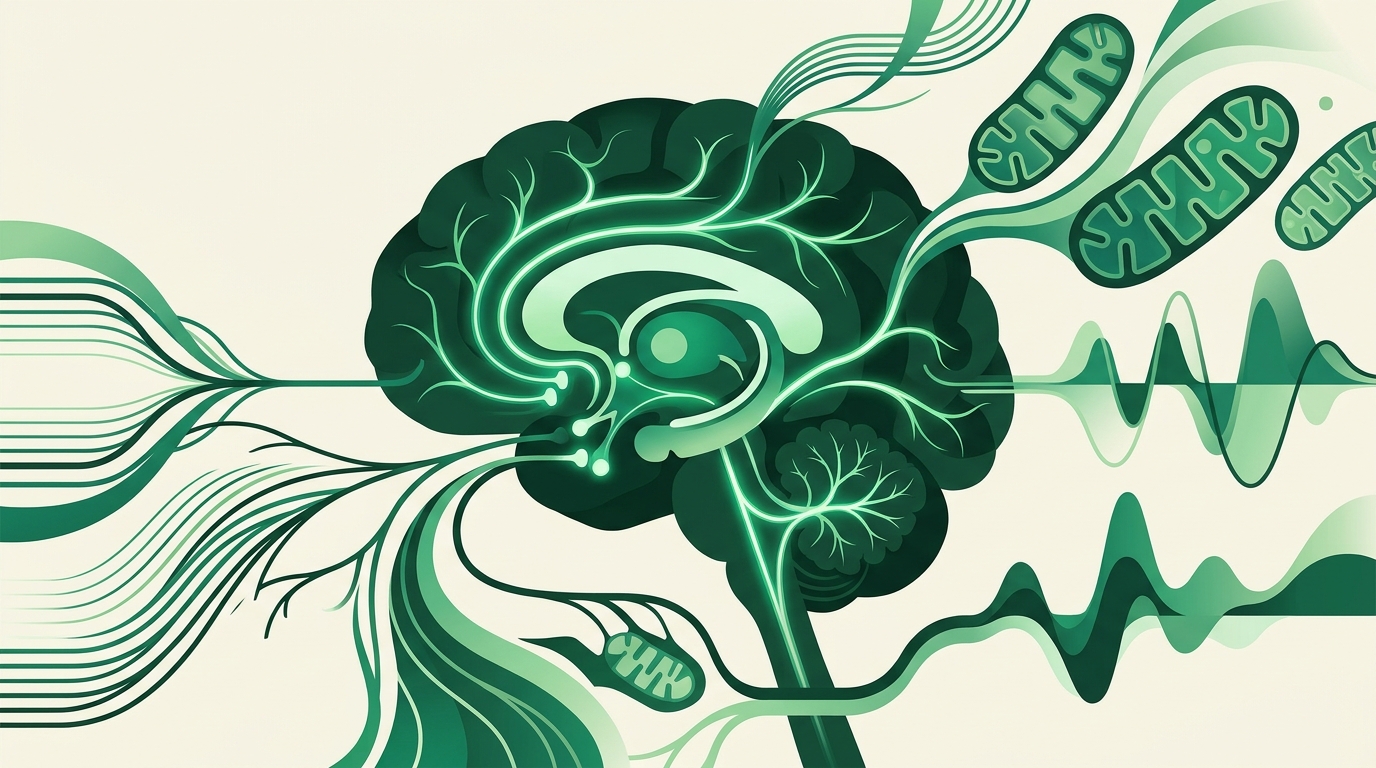
There is a secondary, intriguing physiological mechanism worth discussing: photobiomodulation. At specific wavelengths—namely 660nm (deep red) and 850nm (near-infrared)—photons penetrate cellular tissue and interact directly with cytochrome c oxidase (Unit IV of the mitochondrial electron transport chain). This interaction increases mitochondrial membrane potential, elevates ATP production, and transiently modulates local reactive oxygen species. While mitochondrial photobiomodulation provides genuine cellular benefits for tissue repair and visual contrast sensitivity, it is not an off-switch for wakefulness. Believing that bathing in a red floodlight will put you to sleep while you check work emails is pure fantasy.
The Critical Role of Dim Light Melatonin Onset (DLMO)
In clinical sleep research, our golden benchmark for circadian timing is Dim Light Melatonin Onset (DLMO). DLMO represents the exact timestamp in the evening when your salivary or plasma melatonin concentration crosses a threshold (typically 3 to 4 pg/mL), indicating that your biological night has officially started. In a natural environment without artificial luminescence, DLMO occurs roughly two to three hours before habitual sleep onset.
What happens when you look at an iPad or iPhone within that two-hour window? Clinical trials from Brigham and Women's Hospital and Harvard Medical School have demonstrated that even a modest 30 to 50 lux of blue-enriched light delays DLMO by anywhere from 75 to 90 minutes. You have pushed your entire hormonal sleep window off a cliff. Even if you manage to pass out at your normal bedtime through sheer exhaustion, your circadian phase is delayed. You spend the first half of the night in fragmented light stage 1 and stage 2 sleep, sacrificing the slow-wave delta sleep (SWS) responsible for growth hormone release and cerebral glymphatic clearance.
Worse still, morning comes before your biological night has finished. You wake up with alarm-induced grogginess—sleep inertia—because your melatonin levels haven't cleared. You reach for a double espresso, spike your adenosine-blocked receptors, crash at 3:00 PM, and repeat the cycle.
The Sympathetic Spike: Why Screen Content Trumps Screen Color
The NBC report touched on an element that hardware purveyors love to ignore: cognitive arousal. Let's assume you've installed a heavy-duty physical red-filter acetate over your phone, or you've triple-clicked your iPhone home button to trigger the iOS color-tint accessibility shortcut, rendering your display entirely crimson. You've eliminated the 480nm photons. Are you in the clear?
Not even close.
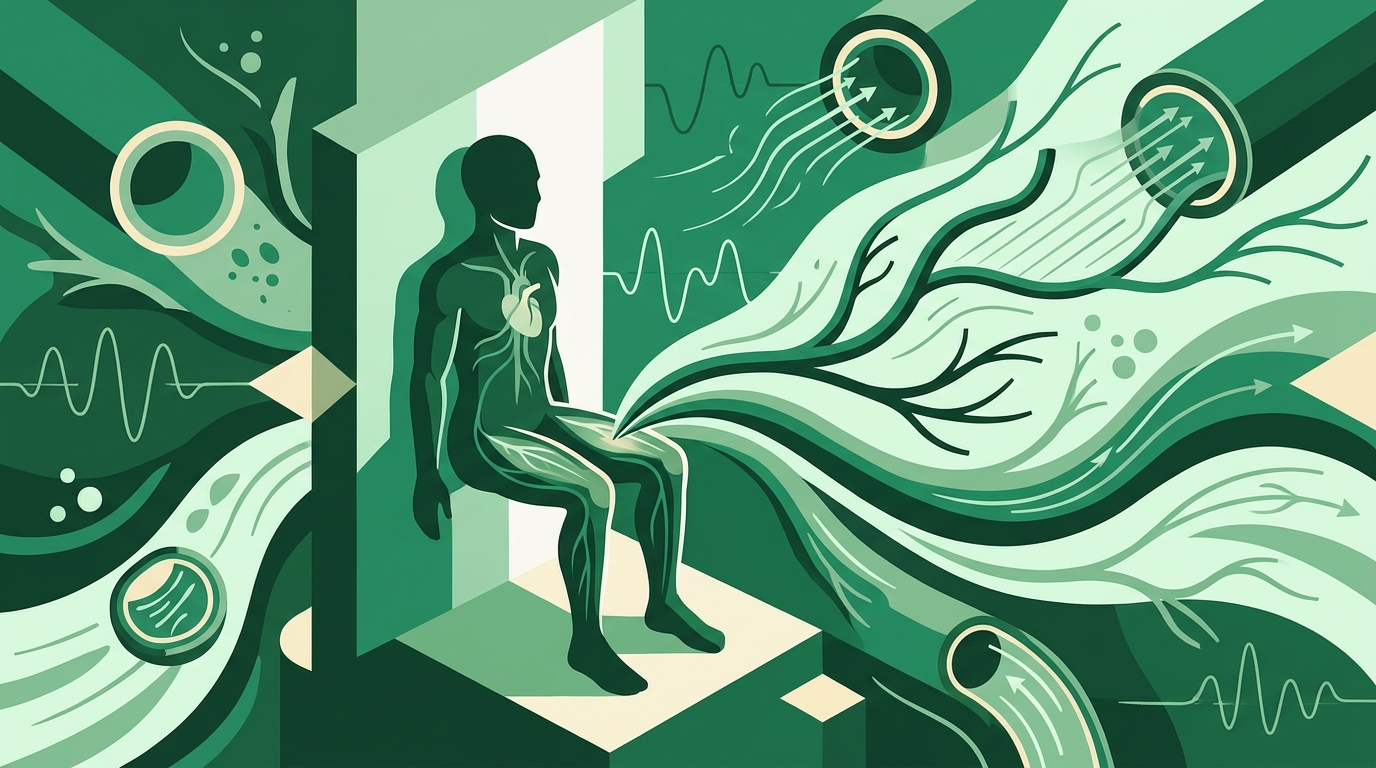
Photons are only half of the neurobiological equation. The other half is the autonomic nervous system. Your retinas are not isolated input sensors; they are visible outposts of your central nervous system. When you scroll through an algorithm designed by hyper-specialized machine learning engineers to exploit your novelty-seeking pathways, your brain stem releases norepinephrine. Your locus coeruleus lights up. Your amygdala processes conflict, provocative headlines, professional envy, or urgent Slack pings.
This cognitive engagement activates your sympathetic nervous system, sparking an acute release of epinephrine and elevating your baseline heart rate. To fall asleep efficiently—achieving a sleep latency under 15 minutes—your core body temperature must drop by roughly 1°C (2°F), and your autonomic balance must shift decisively into parasympathetic dominance (vagal tone). High vagal tone manifests as elevated high-frequency HRV and a dropped resting heart rate. If your sympathetic tone is elevated because you're reading provocative political commentary through a red filter, you will toss and turn with an elevated pulse regardless of what color your screen was.
The Modern Vitality Lab 3-Phase Evening Protocol
Rather than relying on gimmicks, we implement an engineered, zero-compromise environmental protocol. This is the exact framework I follow and prescribe to our consulting athletes and executives. We log our operational workflows and physiological data on our research portal hosted at Dev Dominion, where we maintain all our ongoing longevity tracking notes.
Phase 1: The Circadian Sunset Transition (Sunset to 90 Minutes Before Bed)
- Ceiling Light Elimination: Overhead lighting mimics the zenith sun. The moment the sun drops below the horizon, kill every recessed overhead fixture in your house. Switch exclusively to low-level, floor-standing lamps placed below eye level.
- Color Temperature Cap: Ensure all functional lamps use bulbs rated at 2200K or lower (warm amber). We use smart warm-dimming filaments that drop to 1800K as they dim.
- Digital Shift: Enable software filters (f.lux or native OS night modes) across all monitors. Dial the color temperature to 1900K. Dim your monitor brightness down to the absolute lowest legible threshold.
Phase 2: The Red Photon Quarantine (90 Minutes Before Bed)
- Screen Cutoff: Stop touching hand-held interactive devices. If you must consume media, use a stationary TV screen positioned at least ten feet away, dialed to minimal brightness, or switch to physical books and audiobooks.
- Targeted 660nm Illumination: This is where red lighting genuinely shines. Illuminate your living quarters, hallway, and bathroom using pure red LED bulbs (630–660nm) or low-lux amber lamps. When you brush your teeth, you shouldn't be blasted by 500 lux of 5000K fluorescent bathroom vanity light. That single five-minute bathroom trip can wipe out an hour of careful melatonin accumulation.
- Thermal Preparation: Take a warm shower or hot bath (40–42°C / 104–108°F) for 15 minutes. The vasodilation of blood vessels in your hands, feet, and face flushes core heat to the surface. When you step out, rapid evaporative cooling drives your core internal temperature down, triggering natural somnolence and signaling your SCN that sleep is imminent.
Phase 3: The Zero-Lux Nocturnal Sanctuary (Bedtime)
- Absolute Darkness: Your eyelids are translucent tissue; they do not block ambient light. If you can see your hand in front of your face when your eyes adjust to your bedroom, your room is too bright. Install true 100% blackout roller shades or wear a contoured, zero-pressure eye mask.
- Eliminate Stray Diodes: Cover every smoke detector LED, air purifier status light, and charger indicator with high-density light-blocking tape. A rogue green LED piercing a dark room can disrupt sleep architecture via dermal and retinal photoreception.
- Thermal Floor: Lock your bedroom ambient temperature between 65°F and 68°F (18–20°C). Cooler ambient temperatures preserve REM sleep continuity and prevent middle-of-the-night cortical arousals.
The Bottom Line on the Red Light Trend
NBC News got the general premise right: our modern lightscape is a biological disaster. We have spent thousands of generations syncing our endocrine systems to the solar arc, only to spend the last two decades blasting our retinas with midday-spectrum light at midnight. But buying a five-dollar red party bulb from Amazon and expecting it to counteract phone addiction is naive.
Use red lighting for what it is: an inert, non-disruptive illumination tool that protects the darkness your biology requires. Pair it with absolute screen discipline, low-angle ambient lighting, and strict thermal modulation. Stop searching for passive hacks to outsmart millions of years of human evolutionary biology. Build a clean photobiological environment, protect your melatonin cascade, and let your body do what it was designed to do.